Meta Ads ABO vs CBO - Finally solved
The simplest explanation of ABO and CBO without the fake marketing complexity.
Meta Ads agencies have their own interests.
They want to make money.
And if they gave you:
- one working ad creative,
- one simple strategy,
- and a setup you could run yourself,
they would lose you as a recurring source of revenue.
That’s the truth nobody in the industry wants to say out loud.
So instead, they make everything sound complicated.
The marketing world is full of endless acronyms:
- ABO
- CBO
- ASC
- TOF
- MOF
- BOF
- DCT
- AEM
Every year there’s another “advanced framework” that magically promises better performance.
Most of the time, it’s just basic budget allocation wrapped in corporate language.
What Agencies Usually Tell You
“Campaign Budget Optimization leverages Meta’s machine learning systems to dynamically allocate spend toward high-performing audience clusters in real time.”
Translation:
The algorithm decides where the money goes.
That’s literally it.
The Reality Is Much Simpler
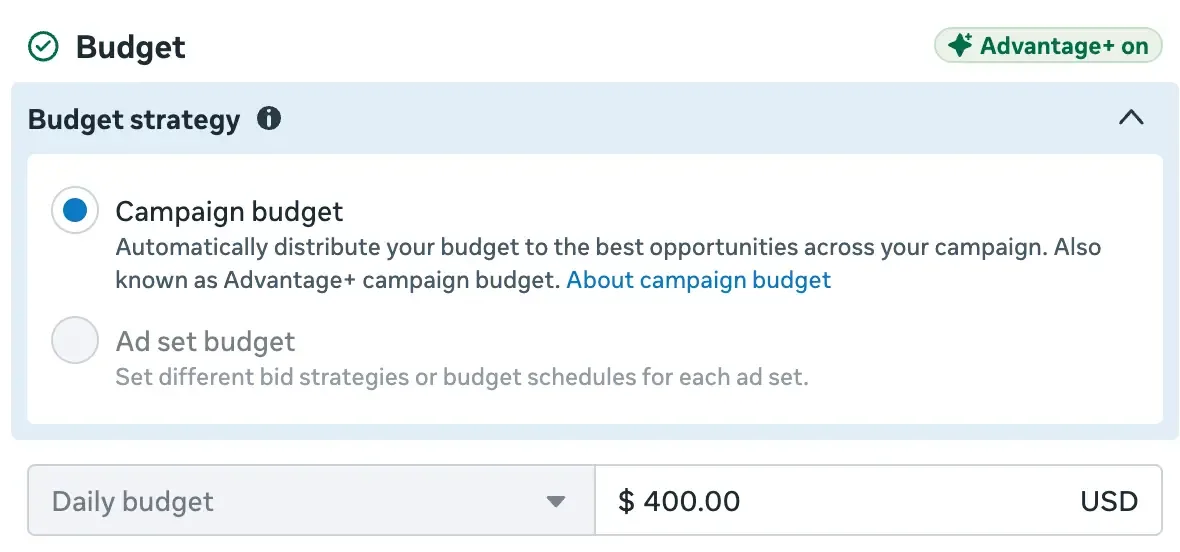
ABO and CBO are just two different ways to tell Meta how to spend your money.
Nothing more.
What Is ABO?
ABO = Ad Set Budget Optimization
With ABO, you control how much money each ad set receives.
Example:
- Ad Set A → $20/day
- Ad Set B → $50/day
- Ad Set C → $10/day
You manually control the spending distribution.
When To Use ABO
Use ABO when:
- you know exactly what you’re doing,
- you want precise control,
- you intentionally want certain ads to receive more money,
- or you want to test ads evenly without Meta interfering.
ABO is for control.
What Is CBO?
CBO = Campaign Budget Optimization
With CBO, you give the campaign one total budget.
Then Meta distributes the money automatically between ad sets.
Example:
- Campaign Budget → $100/day
Meta might spend:
- $70 on one ad set,
- $20 on another,
- and $10 on the third.
The algorithm decides where the budget goes.
When To Use CBO
Use CBO when:
- you don’t want to micromanage,
- you want simpler campaign management,
- or you trust Meta’s algorithm to optimize automatically.
CBO is for convenience.
See? Simple.
That’s all this really is.
- ABO → You decide where the money goes.
- CBO → Meta decides where the money goes.
The internet somehow turned this into rocket science.
The Worst Part?
This setting is mostly organizational.
Seriously.
People debate ABO vs CBO like changing this option suddenly transforms your business.
It usually doesn’t.
Your results mostly come from:
- the creative,
- the offer,
- the hook,
- the copywriting,
- and the landing page.
Not from some hidden budget toggle.
A bad ad with “advanced scaling structures” is still a bad ad.
A great ad with a simple setup often outperforms complicated campaigns.
“But What About Scaling?”
Now, technically, there is a more advanced discussion once you start spending massive amounts of money.
If you have huge budgets, someone could argue that:
- distributing spend across multiple ads more evenly,
- rotating creatives,
- and reducing audience fatigue
can help keep users less bored and less exhausted from seeing the same ad repeatedly.
That discussion matters when you’re scaling campaigns into very large spending territory.
But here’s the reality:
If your budget is not massive, this probably does not apply to you.
Most people obsess over scaling systems before they even have ads worth scaling.
What Actually Lowers CPA
People spend endless hours tweaking Facebook settings trying to reduce CPA.
But what really lowers CPA?
Better ads.
That’s it.
Not magical campaign structures.
Not secret agency settings.
Not complicated frameworks.
Better ads.
The Real Skill Nobody Talks About
The real advantage comes from understanding psychology.
Specifically:
1. Learn The Internal Monologue Of Users
Understand:
- what people secretly want,
- what they fear,
- what frustrates them,
- what they tell themselves internally.
Good ads feel like they’re reading the customer’s mind.
2. Learn How To Turn That Into Desire
Once you understand the internal dialogue, you can:
- amplify pain,
- create emotional desire,
- build curiosity,
- create urgency,
- and position your product as the obvious solution.
That’s where great copywriting comes from.
3. Apply It Correctly To Your Ads
This is where most advertisers fail.
They:
- use weak hooks,
- generic messaging,
- boring creatives,
- and copy that sounds like every other ad online.
Then they blame Facebook settings.
The settings are usually not the problem.
The ad is.
Most Facebook Settings Are Nuances
Once you understand:
- human psychology,
- creative strategy,
- hooks,
- desire,
- and copywriting,
you can ignore 90% of Facebook Ads settings.
Because most settings are nuances.
Nuances do not replace a bad ad.
No campaign structure can save weak creative.
And no acronym will magically fix messaging that nobody cares about.
Final Take
ABO vs CBO is not some mystical advertising secret.
It’s just budget allocation.
- Use CBO if you want simplicity.
- Use ABO if you want precise control.
But stop obsessing over settings.
The biggest improvements in advertising usually come from:
- better hooks,
- better psychology,
- better copy,
- and better creatives.
That’s the part that actually moves results.
Free starter guide
Ship your first Apple Ads campaign in 2 hours.
Most guides make Apple Search Ads sound like a project. It's not. This is the exact setup I use with every new client: campaign structure, keyword match types, starting budget. Two hours, start to finish, no agency jargon.
One email. Unsubscribe anytime.
Keep reading
How do I connect a Meta pixel to my ad account?
How to fix the Meta Ads error: Your ad account needs access to this pixel.
I can't add a Payment method to my Meta Ad account and it was blocked [Solved]
How to fix a blocked Meta Ad account by adding and assigning a valid payment method.
How to Give Access to Add a Payment Method to Your Meta Ad Account
A simple guide to granting the right Meta Business permissions for billing and payment access.
Marketing For Apps vs Udonis: Which Fits Your App Better
Multi-channel scale vs a narrower, direct specialist for Apple Ads and Meta Ads.